Wasp Nest Pest Control
Nests in loft eaves, cavity walls, and garden shrubs peak mid-summer; disturbing them releases defensive wasps. We treat with professional-grade approaches suited to UK building detail—book early if allergies are a concern.
Contact usAbout wasp nest removal
A papery nest in a soffit, shrub or wall cavity needs a controlled treatment, not a supermarket spray. Disturbed workers release a scent that draws more wasps, which is why we treat from a safe distance with the right access equipment.
If you can see regular wasp traffic to one point on the building, stay back and ask us to locate and treat the nest. We cover London, Liverpool, and UK-wide where we operate.
When do wasps nest?
Wasps usually start nesting in early spring or summer. The queen looks for a good place to build a nest and starts by creating a small one about the size of a golf ball. She then lays eggs that hatch into worker wasps (drones). These workers take over building the nest, which grows quickly over the next few weeks.
At first, nests are often too small to notice. But if left alone, they can grow to the size of a football—or even as big as a washing machine by the end of the season. A large nest can hold around 10,000 wasps, so it’s best to deal with it early before it gets too big.
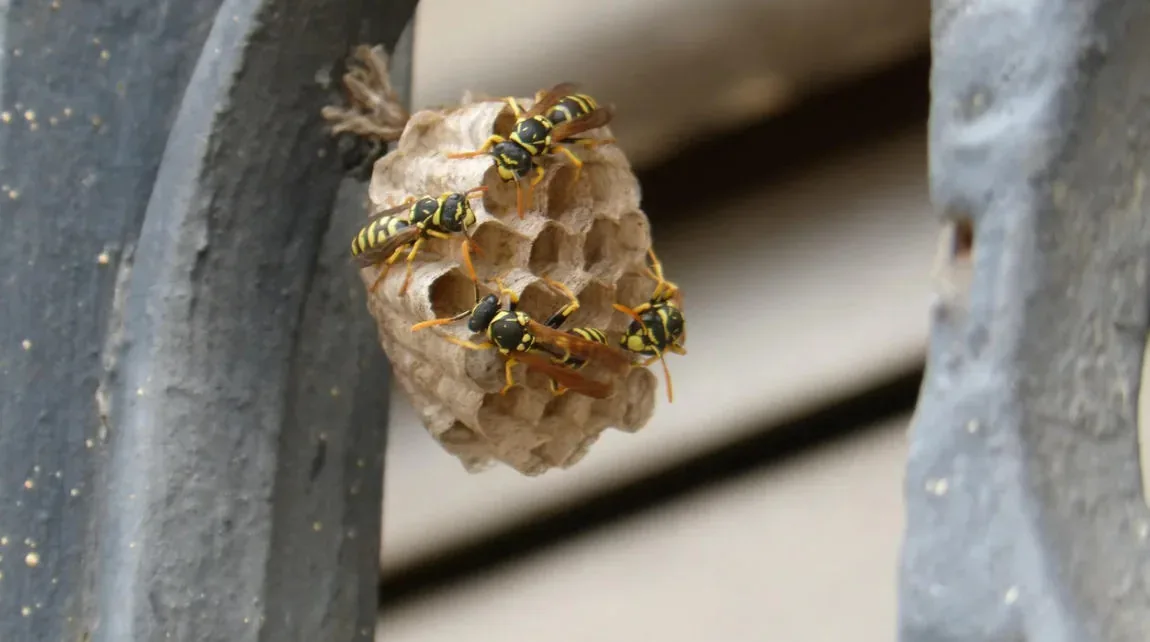
What does a wasp nest look like?
Wasp nests are usually a light brown colour and have a paper-like appearance.
Wasps construct nests from scrapings of wood and timber that is mixed with saliva, this is the reason for their papery appearance. You will often see wasps on garden furniture and fences chewing at the wood.
Signs of a wasp nest
Apart from actually stumbling upon a wasp nest, there are a number of things that might indicate the presence of one in your home. The most obvious indicator is seeing a large number of wasps in or around your property. You may then notice that they gravitate towards specific areas, which can give you an idea of where the nest is located however this I usually where our expert eye comes into play.
How to get rid of a wasp nest
Many people are severely allergic to wasp/hornet/bee stings and often is the case you don’t know until you get stung. There is no circumstance where we would recommend that anyone should try to treat a nest themselves.
At Pestoid we treat wasp nests with specialist access and application equipment. Activity at the nest usually stops within a few hours. If wasps are still using the same site, we will discuss a return visit rather than leave you guessing.
Will wasps return to a destroyed nest?
Wasps do not return to a destroyed nest. If left to their own devices wasps would naturally die once colder weather and sub zero evenings set in. New queen wasps leave nests at the end of the season and hibernate overwinter ready to start the process again the following spring, all other wasps left in the nest including the current queen would die.
Common wasp nest locations
Wasps commonly build nests in quiet, sheltered areas like lofts, sheds, and even underground. Lofts and sheds are ideal because they’re often undisturbed and provide good protection, while underground nests usually form in old animal burrows and can be dangerous if accidentally stepped on or disturbed. All three locations pose a risk, especially since nests may go unnoticed until they become a serious problem.