Bird control and proofing
Roosting on ledges, blocked gutters and fouling on paths are building problems as much as wildlife ones. We specify proofing that fits the species and the law, then install it. +44 7776 111596
Contact usThis page is for proofing and lawful management of several bird species on buildings. It is not a second copy of our pigeon control page. Feral pigeons are one of the species we see; gulls, house sparrows and starlings need different products and a careful reading of the same Act.
The lasting work is exclusion: stop birds landing or nesting where they cause harm, then clean down. Killing birds is not the default, and it is not lawful without a licence.
Species we are asked about
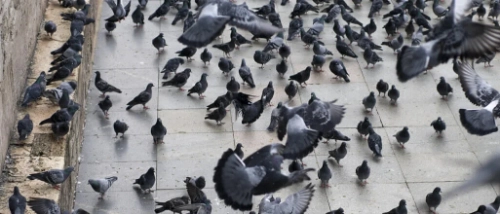
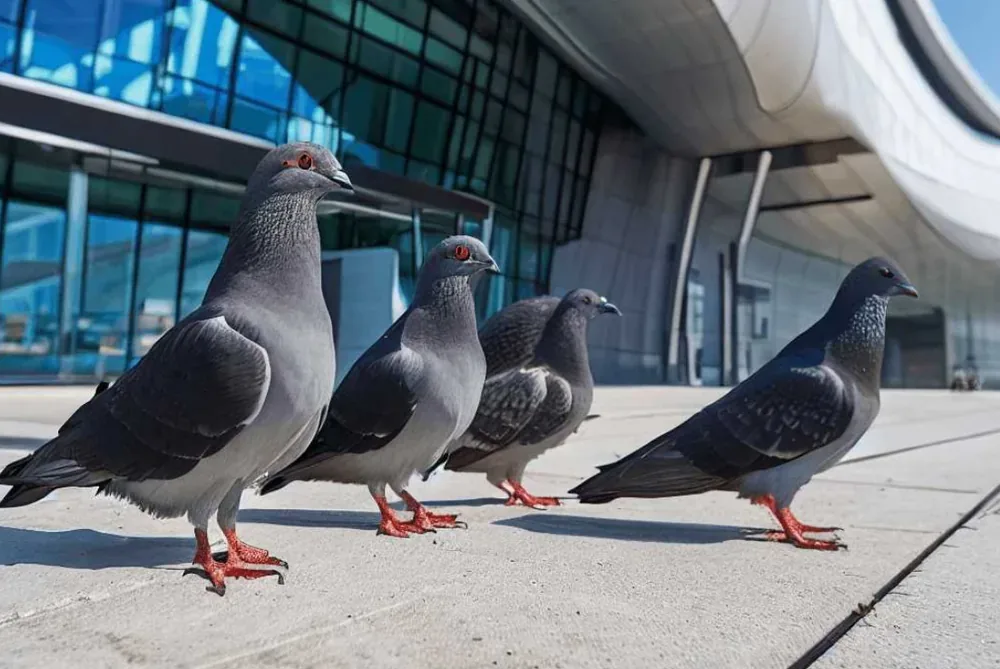
Feral pigeons use ledges, roof voids and signage. Herring gulls and lesser black-backed gulls nest on flat roofs and cause noise, fouling and aggressive behaviour in the breeding season. House sparrows and starlings use eaves, vents and cavities; both are still fully protected as wild birds.
The species changes the proofing. Mesh size, whether post and wire will hold a gull, and whether a cavity can be closed after nesting has finished are survey decisions, not a standard kit list.
Signs and problems
Droppings on paths, fire escapes and shop fronts create a slip hazard and stain masonry. Gutters and downpipes block. Nests bring mites and other insects into lofts. On commercial buildings the mess is also a reputation problem at the entrance. Look for roost lines on ledges, nesting material in gutters, and birds entering the same gap each evening.
The law: Wildlife and Countryside Act 1981
In Great Britain, all wild birds, their nests and eggs are protected by the Wildlife and Countryside Act 1981, section 1. That section makes it an offence to intentionally kill, injure or take any wild bird; to take, damage or destroy the nest of any wild bird while that nest is in use or being built; or to take or destroy an egg of any wild bird.
Certain scarce species listed on Schedule 1 of the Act have extra protection against disturbance at or near an active nest. House sparrows and starlings are not Schedule 1 birds, but they remain protected under section 1 in the same way as other wild birds.
Section 16 provides for licences. Lethal control is lawful only where a relevant licence applies, and only as a last resort after proofing and exclusion. We do not interfere with an active nest unless a lawful basis exists. Equivalent protection applies in Northern Ireland under the Wildlife (Northern Ireland) Order 1985.
Proofing options
Netting closes a roof void, courtyard or elevation so birds cannot land or nest behind it. Post and wire (sprung wire) denies a ledge without the visual weight of netting; it is often used on parapets and architectural lines. Spikes discourage perching on narrow sills and signs. Ledge modification — changing the angle or depth of a shelf — removes the perch itself.
Gull work on a flat roof is specified separately from pigeon spikes on a shop fascia. Wrong mesh, poor fixings or proofing installed over an active nest creates a welfare and legal problem. We survey first.
What Pestoid does
We survey the building, identify the species, and note nest status before anyone lifts a ladder. The specification matches the ledge, roof or cavity. We install the agreed proofing, then clean down droppings and nesting material where it is safe and lawful to do so.
If lethal control is even discussed, it is only after exclusion has been considered and only where a licence would apply. Most jobs end at proofing and clean-down.
Prevention
Do not feed birds on commercial frontages or balcony rails if you then need them off the building. Keep bin stores closed. Repair broken tiles, vents and eaves gaps after the nesting season, not during it. Review flat roofs before spring if gulls used them last year.
How long it takes
A small ledge can be proofed in a short visit. A roof net or a multi-elevation building takes longer, and work may have to wait if nests are active. Clean-down is scheduled around access and waste handling. We give a programme after the survey, not a stock timescale.
What affects the cost
Height, access equipment, the length of ledge or area of net, the species, and whether a clean-down is included all change the quote. Heritage façades and occupied sites need more planning than a simple parapet. We price the specification, not a generic bird visit.
To request a survey, contact us or call +44 7776 111596.
Frequently asked questions
Are all wild birds protected in the UK?
In Great Britain, all wild birds, their nests and eggs are protected by the Wildlife and Countryside Act 1981. Section 1 makes it an offence to intentionally kill, injure or take a wild bird; to take, damage or destroy a nest while it is in use or being built; or to take or destroy an egg. Equivalent protection applies in Northern Ireland under the Wildlife (Northern Ireland) Order 1985.
When is lethal bird control allowed?
Lethal control is lawful only where a relevant licence applies, and it is a last resort after exclusion and proofing. Section 16 of the Wildlife and Countryside Act 1981 provides for licences, including for purposes such as preserving public health or public safety. We do not use lethal methods unless a lawful basis exists.
Can you remove a bird nest?
Not while the nest is in use or being built, unless a licence specifically allows it. Once a nest is clearly unused, it can often be removed and the site proofed so birds cannot return. Timing depends on the species and the season.
How is this different from pigeon control?
Our pigeon page covers feral pigeon work on ledges, roofs and frontages. This page covers proofing and lawful management for a wider group of species, including gulls, house sparrows and starlings, where the legal and proofing approach can differ.
Areas we cover
Bird control and proofing is available across London, Liverpool, and UK-wide where we operate. Call +44 7776 111596 to talk through the building.