Silverfish treatment
A silvery insect disappearing under the bathroom skirting at night is often a humidity problem as well as a pest one. We treat the rooms and tell you what to change so they do not return. +44 7776 111596
Contact usSilverfish are a damp symptom. Spray without lowering humidity and they typically come back. The useful visit treats the harbourages and points at leaks, condensation and extractors that are not doing their job.
This sits with our other residential pest control work. It is not an emergency in the medical sense; it is a household insect plus a building-moisture question.
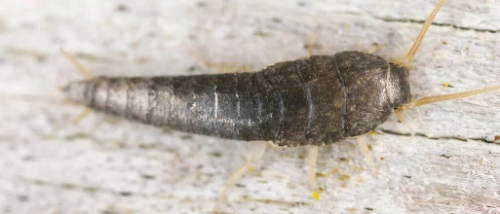
Signs of silverfish
They are nocturnal. You are more likely to see one when you switch a bathroom or kitchen light on at night. Look for irregular grazing on paper, book bindings, wallpaper paste and starchy finishes, and for small pepper-like droppings in damp corners. Shed scales can show as a fine grey dust.
Silverfish or firebrat?
Silverfish have a tapered, silvery body and prefer cool, damp rooms: bathrooms, kitchens, utility spaces and unused cupboards against an outside wall. Firebrats look similar but favour hotter, drier places such as airing cupboards and the area around a boiler. Mixing the two up sends treatment and humidity advice to the wrong rooms.
Why they appear
High humidity, condensation on cold walls, extractors that are never used, and slow leaks behind baths or under sinks all suit silverfish. New plaster and stored paper in a damp spare room can feed them. A clean house can still have them if the air stays wet.
Risks
They graze books, wallpaper, stored documents and some fabrics with a starch finish. They do not bite people. The larger issue is often the damp they indicate: untreated leaks and condensation damage the building as well as attracting the insect.
Treatment options
Insecticide in harbourages — skirting voids, pipe runs, the backs of cupboards — reduces the population. Humidity reduction is the other half: run extractors, fix leaks, heat and ventilate cold rooms, and stop drying laundry in an unvented bathroom. Either measure alone is usually incomplete.
What Pestoid does
We confirm silverfish or firebrat, map the damp rooms, and treat the harbourages we can reach. We tell you which moisture jobs sit with you — extractor use, a plumber, a window left ajar after a shower — because those jobs decide whether the insects stay away. A follow-up is used if numbers remain after the humidity work has started.
Prevention
Use bathroom and kitchen extractors every time you cook or shower, and leave them running long enough to clear the steam. Repair dripping taps and hidden leaks. Do not store books or paper against a cold, wet wall. Keep cupboard doors ajar occasionally so still air does not sit behind them.
How long it takes
Numbers often fall over a few weeks once treatment and drier air are both in place. If the bathroom is still running wet, expect them back. We will not give a date that ignores the moisture.
What affects the cost
How many rooms show activity, how accessible the voids are, and whether a return visit is sensible all affect the quote. A single bathroom is a different job from a flat with condensation in every room.
Contact us or call +44 7776 111596.
Frequently asked questions
Are silverfish a sign of damp?
Often, yes. Silverfish thrive where humidity stays high: bathrooms, kitchens, laundry rooms and poorly ventilated corners. Finding them is a reason to check for leaks, condensation and unused extractors, not only to apply insecticide.
What is the difference between a silverfish and a firebrat?
Silverfish prefer cool, damp rooms. Firebrats look similar but favour hotter, drier spots such as airing cupboards and around boilers. Identification matters because the rooms we treat and the humidity advice we give will differ.
Will spraying alone get rid of silverfish?
Insecticide can reduce numbers, but if humidity stays high they typically return. Lasting control combines treatment with ventilation, extractor use, fixing leaks and reducing condensation.
Do silverfish bite people?
They do not bite or spread disease in the way some other household pests do. The practical problems are grazing on paper, wallpaper paste, book bindings and starchy finishes, and the damp conditions they often indicate.
Areas we cover
Silverfish treatment is available across London, Liverpool, and UK-wide where we operate. Call +44 7776 111596 to arrange a visit.